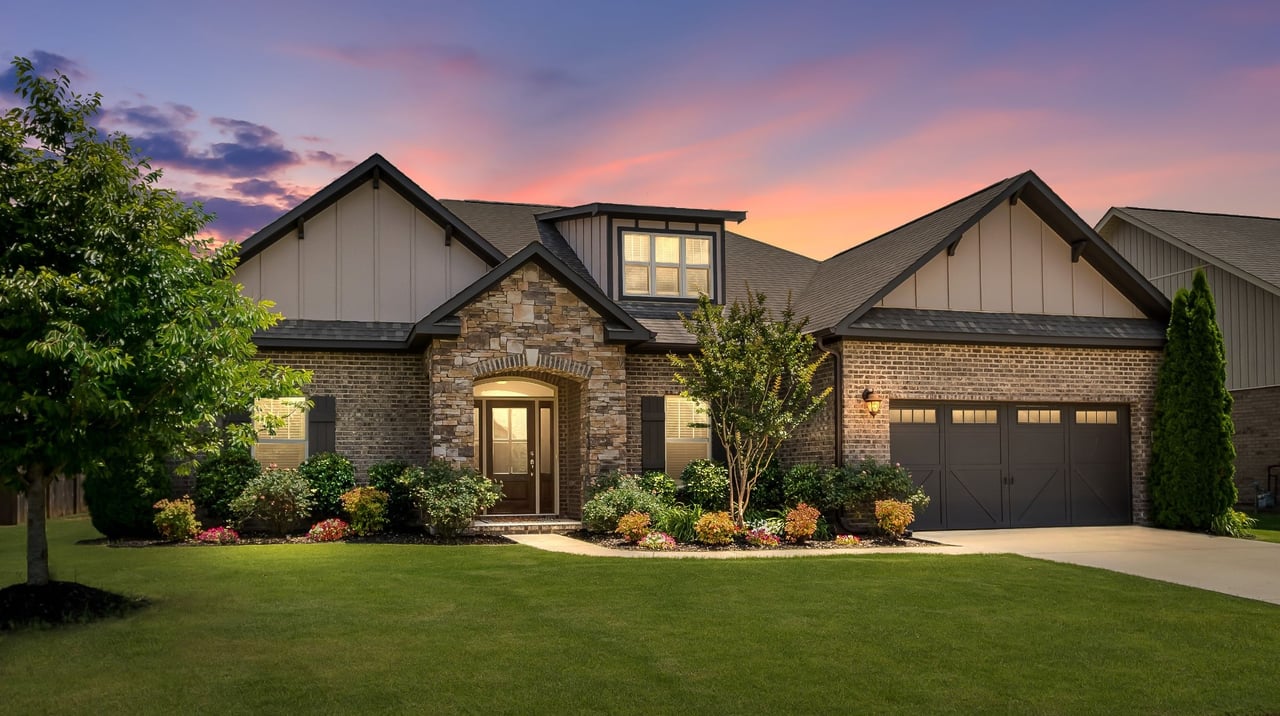
Picture a buyer who found two homes in Georgetown this summer, both listed within a few thousand dollars of $500,000, both roughly the same square footage, both zoned to Georgetown ISD. One sat in Wolf Ranch, the master-planned community that spans both sides of Highway 29 near I-35. The other sat in Berry Creek, an older, established neighborhood on the north side of town. On paper, the two houses looked like a coin flip.
Then the tax certificate came back during the option period, and the numbers stopped looking like a coin flip. The Wolf Ranch home carried a combined tax rate more than half a percentage point higher than the Berry Creek home. Same price. Different bill, every single year they own the house.
This is not a story about one unlucky buyer. It is the standard shape of shopping for a home in Georgetown right now, and it is worth understanding before you fall for a floor plan.
What actually shows up on the tax certificate
Wolf Ranch sits inside two Municipal Utility Districts, Georgetown MUD No. 28 and No. 29, a fact confirmed on the community's own HOA site. A MUD is a special taxing entity that Texas allows developers to set up so that water lines, sewer service, drainage, and roads can get built years before a city's own utility budget would otherwise reach that far out. The tradeoff is that the district issues bonds to pay for that infrastructure, and it repays those bonds with a property tax layered on top of everything else already on your bill: city, county, and Georgetown ISD.
Berry Creek does not have that layer. The whole subdivision sits inside Georgetown's city limits with no MUD or PID attached, which keeps its combined rate closer to 1.8 percent of assessed value. Sun City, the age-restricted 55-plus community on Georgetown's south side, is in a similar position for the same reason: it was built out and annexed long enough ago that the infrastructure debt tied to any special district has already been retired or was never needed in the first place.
None of this is disclosed on a listing sheet. It shows up on the tax certificate, which most buyers do not pull until they are already under contract.
The number that actually moves, year by year
Here is what makes Wolf Ranch a useful case study rather than a cautionary tale. Its combined tax rate, MUD included, has been published for four consecutive tax years, and it has not stayed flat.
| Tax Year | Combined Rate (city, county, GISD, MUD) |
|---|---|
| 2021 | 2.7228% |
| 2022 | 2.6132% |
| 2023 | 2.4482% |
| 2024 | 2.4691% |
Read left to right and the trend is a decline of roughly a quarter of a percentage point over three years, then a small uptick in the most recent year. On a $500,000 assessed value, that range is the difference between a tax bill near $13,600 and one near $12,250.
Why the rate is supposed to shrink, and why it didn't in one year
MUD bonds are structured like any other debt: the district borrows to build the infrastructure up front, then collects tax revenue to pay it down over roughly 20 to 30 years. As the balance shrinks, the tax rate needed to service it shrinks too. That is the mechanism behind the 2021-to-2023 decline in Wolf Ranch's numbers, and it is the same mechanism at work in MUDs across Williamson County generally.
It is not a guarantee that every year moves in one direction. A district can issue a new bond series to fund a later phase of construction, refinance existing debt, or see assessed values shift enough to require a rate adjustment even while the dollar amount owed stays similar. The bump from 2.4482 percent in 2023 to 2.4691 percent in 2024 is a small, real example of that. The takeaway for a buyer is not "MUD rates always fall." It is "MUD rates move with the bond schedule, and you can find out where a specific district sits in that schedule before you write an offer." Williamson County publishes each district's current worksheet, including separate filings for MUD No. 28 and MUD No. 29, on its official tax rate page, and that page is the place to check the actual current-year number rather than relying on a rate from a prior tax year.
What "no MUD" is actually worth
Run the same $500,000 assessed value through Berry Creek's roughly 1.8 percent combined rate and the annual bill lands near $9,000. Compare that to the most recently published Wolf Ranch figure of 2.4691 percent, which puts the same value near $12,350. The gap is a little over $3,300 a year, or roughly $275 a month, money that never shows up in a mortgage payment calculator unless you specifically load in the correct tax rate for that address rather than a citywide average.
That gap is not a reason to avoid new construction. Wolf Ranch buyers are paying for something real: an on-site amenity program, walkable access to the H-E-B-anchored Wolf Ranch Town Center, and miles of trail along the San Gabriel River that an established subdivision simply cannot retrofit. The point is that the comparison has to happen in dollars, not in list price, because two homes priced identically at closing can diverge by thousands of dollars a year for as long as you own either one.
The wider Georgetown map
Wolf Ranch is the most visible example because it is Georgetown's largest active master-planned community, but it is far from the only MUD in town. Community Impact's reporting on Williamson County's utility districts identifies several others by name: MUD No. 1 covers Saddle Creek, MUD No. 15 covers Teravista, MUD No. 25 covers Water Oak, and MUD No. 30 covers Crescent Bluff. Each district sets its own rate independently based on its own bond schedule, its own phase of buildout, and its own debt load, so a rate you hear quoted for one Georgetown neighborhood tells you nothing reliable about the neighborhood next door.
If you are comparing a shortlist of Georgetown addresses, the only way to know what you are actually signing up for is to pull the specific district worksheet for each one, not to assume a single "Georgetown tax rate" applies across the board.
What to actually do before you write an offer
A few habits solve most of this before it becomes a surprise:
- Ask for the full tax certificate during your option period, not just the county's estimated rate, and confirm whether the property sits inside one MUD, two MUDs like Wolf Ranch, or none at all.
- Look up the specific district's current worksheet on the Williamson County tax rate page rather than relying on a rate quoted in a listing description or a builder's brochure.
- If you plan to hold the home for five years or more, ask how many years remain on the district's bond schedule. A MUD that is 15 years into a 25-year bond is a different financial picture than one that just broke ground.
- Run your own math on assessed value times the combined rate for each specific address you are comparing, rather than comparing list prices alone.
If you are weighing new construction against an established Georgetown neighborhood, our Georgetown neighborhood guide is a good starting point for the broader picture, and our buyer resources walk through the rest of the process once you have a shortlist. Our mortgage calculator can help you model a specific address once you have the correct combined rate in hand, which matters more here than almost anywhere else in Central Texas.
A couple of questions worth answering directly
Does a MUD tax ever go away completely? Yes, once the district's bonds are fully repaid, though that can take the full 20 to 30 year term depending on how the district was financed and whether it issues additional bonds along the way.
Is a MUD always more expensive than city taxes? In practice, yes in Williamson County right now, since a MUD adds a rate on top of the same city, county, and school district levies that an in-city home already pays. The size of that add-on is what varies, and it is worth confirming for each specific address rather than assuming a flat percentage across every district.
Georgetown rewards buyers who read past the list price. If you want a second set of eyes on what a specific address will actually cost you to own, not just to close on, Let's Connect and we will pull the numbers together before you write the offer.