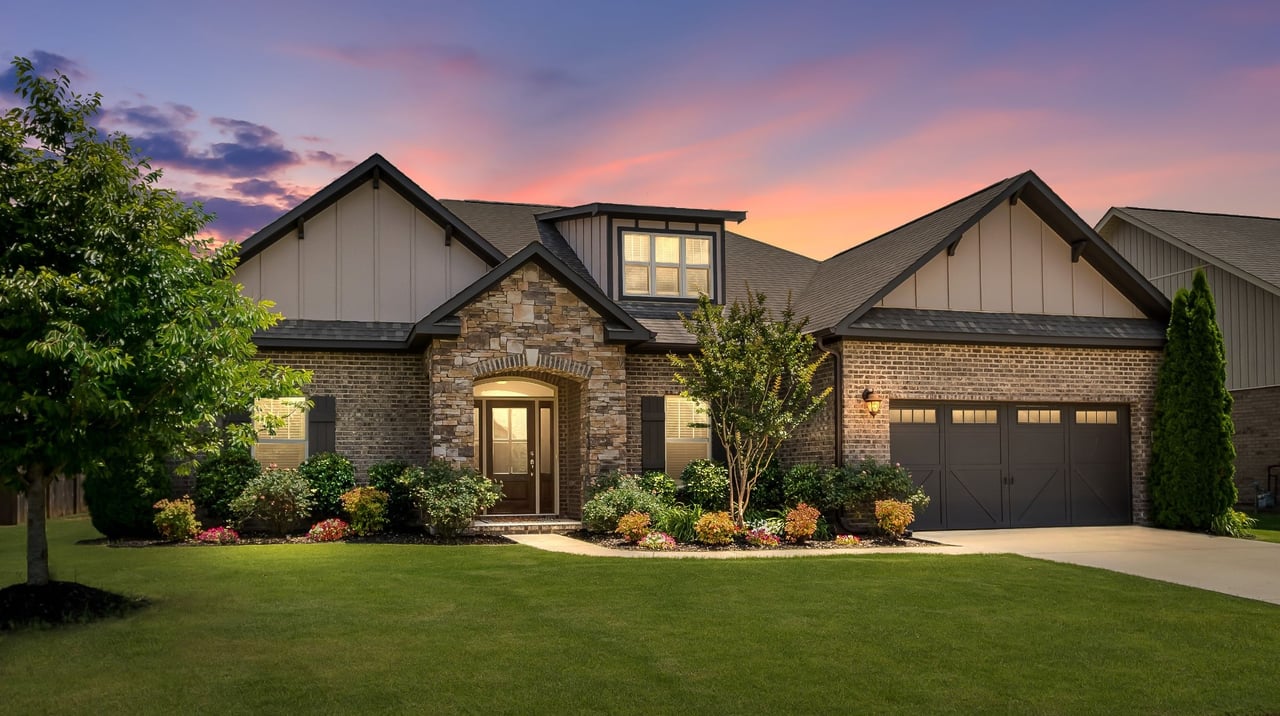
Stand in a Crystal Falls model home long enough and an agent will eventually point out the obvious selling point: this is Leander, not Cedar Park, and the price per square foot proves it. What rarely gets said out loud is which of the city's two commuting systems is actually doing the work of keeping that price down, or whether it applies to the buyer standing in the room.
Leander gets talked about as the commuter suburb with options: a toll road that gets you south fast, and the northern terminus of Austin's only commuter rail line sitting a few minutes from most of its master-planned communities. Both are real. Neither is free, and neither is getting cheaper. The part that doesn't make it into most listing conversations is that these two systems serve almost entirely different commuters, and picking the wrong one for your actual job is where the math on Leander's price advantage falls apart.
Two systems, two very different rulebooks
The Red Line runs the full 32 miles between downtown Austin and Leander Station, the northernmost of its ten stops. It's a genuine asset for a city this size, and it's also a system with real limits that a lot of buyers gloss over. It doesn't run on Sundays. It's a diesel commuter line built for peak-hour travel, not an all-day transit spine, so trips outside the morning and evening windows get sparse fast.
The fare structure reflects that same commuter-only design. A single rail ride runs $3.50 at standard fare, $1.75 reduced. Ride it daily and CapMetro's commuter-service day cap tops out at $7, versus $2.50 for local bus and rail-adjacent service. That $7 ceiling has held since 2015. CapMetro's board is scheduled to vote on a fare increase proposal on September 28, 2026, just weeks from now, so a rider budgeting off the current $7 cap should treat that number as provisional, not permanent.
The 183A Toll Road runs the other direction of the same corridor, physically and financially. It's an electronic-only toll facility, meaning there's no lane where you slow down and pay cash. You either carry a tag or you get billed by mail at a real markup. The road itself just got longer: a 5.3-mile Phase III extension from Hero Way north to Liberty Hill opened on April 9, 2025, stretching the corridor to nearly 16 continuous miles from RM 620 to Liberty Hill. And the price of using it just went up. Effective January 1, 2026, the Central Texas Regional Mobility Authority raised rates by 3.01% at most tolling points, a change it ties directly to the Consumer Price Index. That's not a one-time correction. It's an annual mechanism, built into the road's own rate policy specifically to avoid one big jump every few years in favor of small ones every year.
Here's the detail that matters if you're actually shopping in Crystal Falls: three tolling points saw an increase above that standard 3.01% bump, and two of them sit right at the community's own on-ramp and mainline plaza. Both went up nine cents per pass, not the two-to-six cents applied elsewhere on the system. A toll increase that size sounds trivial until you multiply it by two commutes a day, most weeks of the year, for as long as you own the house.
Why the train doesn't rescue most Leander commuters
The instinct is to treat the Red Line as the workaround for rising toll costs. For a specific slice of buyers, it genuinely is. If your job sits within an easy walk of a downtown Austin station, and your schedule is a standard weekday nine-to-five, the math favors rail outright. A $7 daily cap beats a toll bill that climbs every January, and you skip the gas and the parking entirely.
The problem is that most people moving to Leander for work aren't commuting to that kind of job. The corridor's dominant employment gravity sits northwest of downtown, around the Domain, Apple's campus, and Dell, none of which sit on the Red Line's ten stops. For a Leander household with one spouse working near Parmer Lane and another working downtown, only one of those two jobs can actually use the train. The other one is driving, which means the toll road, which means the CPI-linked rate increase applies whether or not anyone in the house ever sets foot on a train.
This is the quiet mismatch behind Leander's price story. The city's median sale price came in at $421,000 over the three months ending July 2026, per Redfin's tracking, about $190 per square foot and down slightly from the year before. That's a real gap versus Cedar Park and Round Rock, and both the toll road and the rail line get credit for it in casual conversation. But the discount only behaves the way people assume it does if your specific commute matches the system that's actually cheap. For the Domain-and-Apple-corridor household, that system is neither one. It's a toll road with an annual increase built into its rate structure.
What this looks like on a specific commute
| Red Line commuter rail | 183A Toll Road | |
|---|---|---|
| Coverage | 32 miles, 10 stations, Leander to downtown Austin | Nearly 16 miles, RM 620 to Liberty Hill (Phase III opened April 2025) |
| Schedule | Monday through Saturday, no Sunday service | Available every day, all hours |
| Recent price change | Day cap unchanged since 2015; fare increase vote set for Sept. 28, 2026 | Most tolling points up 3.01% effective Jan. 1, 2026, tied to CPI |
| Local wrinkle | Best suited to jobs within walking distance of a downtown station | Crystal Falls ramp and mainline plaza rose 9 cents, above the standard increase |
| Who it actually serves | Weekday downtown commuters on a standard schedule | Everyone commuting toward the Domain, Apple, Dell, or any non-downtown job |
The takeaway isn't that one system beats the other. It's that they solve for different commutes, and a Leander address only delivers its advertised savings if your daily drive matches the system doing the discounting.
What to actually check before you write an offer
- Map your real commute, not the neighborhood's marketing commute. A Crystal Falls or Travisso address advertised as "near the toll road" or "minutes from the rail station" tells you proximity, not which system fits your job.
- If you're rail-curious, confirm your employer sits within a reasonable walk of a downtown station, and that your schedule doesn't depend on weekend service.
- If you're toll-dependent, budget for the annual CPI-linked increase as a recurring line item, not a one-time cost. It's policy, not an exception.
- In newer master-planned sections built inside a MUD, like parts of Travisso, check the current-year tax rate directly rather than relying on a figure from a listing that may be a year or two old. Rates in these districts move annually as bonds amortize.
- Watch Northline, the roughly 115-acre mixed-use district planned around the existing rail stop. It's the one project that could eventually shift which Leander commutes rail actually serves well, but it's a future variable, not something to price into an offer today.
A few questions worth asking before you commit
Does living near 183A automatically mean a cheaper commute than living near the rail line? Not on its own. It depends entirely on where you work. The toll road serves any destination the road physically reaches, including the Domain and Apple corridor, but it comes with an annual rate increase built into CTRMA policy. The rail line is cheaper per ride, but only useful if your job is within walking distance of one of its ten stations and your schedule doesn't require Sunday travel.
Is the Red Line worth planning around if I don't work downtown? For most jobs in the Domain, Apple, or Dell corridor, no. Those employers aren't on the rail line's route, so the daily fare cap doesn't come into play and you're commuting by road either way.
Will the toll or the fare go up again soon? The toll side already has its answer: CTRMA's rate policy adjusts annually, tied to CPI, specifically to avoid a large jump every few years. On the rail side, CapMetro's board is voting on a proposed fare increase on September 28, 2026. Anyone budgeting off the current $7 commuter day cap should treat that as a number likely to change within the month.
If you're comparing a Leander address against Cedar Park, Round Rock, or Georgetown and trying to figure out what your actual commute will cost once you're past the closing table, that's exactly the kind of math I walk through with buyers before they write an offer, not after. You can see how Leander fits into the wider north corridor on our Leander neighborhood page, or start with our buyer resources if you're still mapping out where in Greater Austin actually matches your commute and your budget.
Let's Connect and we'll run the real numbers on the specific address you're considering, not just the neighborhood average.